Vienna Symphony Meets SM Entertainment: How K-Pop Classics Like EXO and Red Velvet Became Orchestral News in Austria
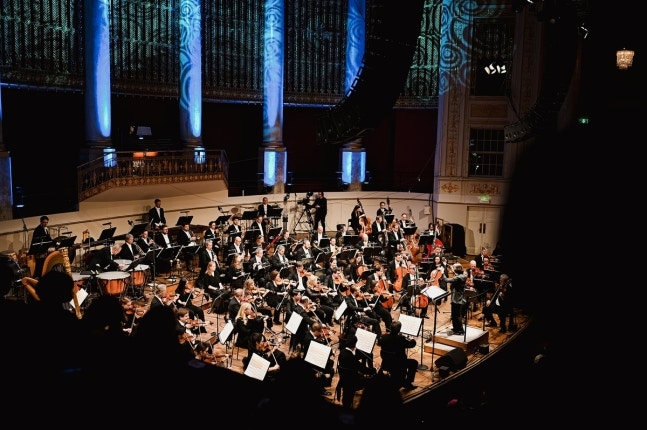
Vienna Symphony Brings SM Entertainment Hits to the Concert Hall in "Wiener Symphoniker X K-Pop"
The Vienna Symphony teamed up with SM Entertainment for a headline-making crossover concert in Austria’s capital, according to SM Classics, the label affiliate behind the orchestral expansions of SM’s music. The event, titled
"Wiener Symphoniker X K-Pop,"
positioned K-pop not as a side-stage pop trend, but as material robust enough to be reinterpreted through Europe’s long-standing symphonic tradition.In a statement describing the concept, the orchestra said it “traveled acoustically to South Korea and fused the colorful and dazzling world of K-pop with the European orchestral tradition.” The framing is significant: rather than simply adding strings to familiar tracks, the concert presented K-pop as a cultural destination—one that can be “visited” and translated through orchestral language without losing its energy and identity.
Wiener Symphoniker X K-Pop: Why This Vienna Symphony Collaboration Matters for K-pop
For K-pop’s global trajectory, collaborations with legacy institutions carry a different weight than standard overseas tours. A Vienna Symphony program built around SM artists’ catalog signals recognition from a classical music ecosystem known for protecting tradition and prestige. Hosting K-pop arrangements in this context is a form of validation: it suggests the songs have structure, melodic clarity, and narrative momentum that still works when removed from electronic production and choreography.
This is also a strategic intersection of industries. SM Entertainment has increasingly invested in “IP expansion”—finding ways for songs and artist brands to live beyond the original idol performance format. An orchestral concert is one of the clearest examples of format diversification: it can attract classical audiences curious about K-pop, and K-pop audiences interested in hearing familiar hooks reframed with scale and cinematic depth.
Just as importantly, Vienna is not a random stop. The city’s identity is deeply tied to classical music heritage, which makes a K-pop-meets-symphony program feel like a deliberate statement rather than a novelty. The message is that K-pop is now a repertoire—not only a trend—capable of being curated like a concert season program.
SM Artists’ Songs Reimagined: EXO “Growl,” SHINee “Sherlock,” Red Velvet “Red Flavor,” and aespa “Black Mamba”
The setlist leaned into recognizable hits across generations of SM Entertainment’s roster. The program included EXO’s “Growl,” SHINee’s “Sherlock,” Red Velvet’s “Red Flavor,” and aespa’s “Black Mamba,” creating a timeline that spans multiple eras of K-pop fandom and sound design.
These choices make sense for orchestral treatment because each track has strong musical anchors: memorable motifs, clear rhythmic signatures, and dynamic shifts that can be expanded with strings, brass, and percussion. “Growl,” for example, is driven by groove and tension—elements that can become more dramatic when voiced by orchestral sections. “Sherlock” relies on contrast and buildup, a natural fit for symphonic pacing. “Red Flavor” brings bright, melodic optimism that translates well into lush, colorful arrangement. “Black Mamba,” built on intensity and impact, can gain scale when orchestration amplifies its punch and cinematic energy.
The broader implication is that SM’s catalog is being positioned as adaptable “content” for multiple listening environments—arena, streaming playlist, soundtrack, and now concert hall—without losing its core identity. That adaptability is exactly what helps K-pop remain competitive in an increasingly crowded global music economy.
SM Classics and the K-pop Orchestra Trend: What Comes Next for Global Concert Programming
The involvement of SM Classics indicates this wasn’t an isolated experiment but part of a larger effort to formalize orchestral K-pop as a repeatable cultural product. As more listeners discover K-pop through platforms like YouTube and OTT music content, orchestral projects provide a different entry point—one that emphasizes composition and arrangement over visuals.
Looking ahead, concerts like “Wiener Symphoniker X K-Pop” could influence how global presenters build programs: themed nights built around major labels, composer-arranger showcases, or orchestra tours featuring localized K-pop selections. For the classical industry, it’s also a potential audience bridge—bringing in younger listeners and international fan communities who may be attending a symphony performance for the first time.
For SM Entertainment and its artists, the benefit is long-tail value. Orchestral reinterpretations help extend a song’s life, refresh its appeal, and strengthen its status as a “standard” that can be rearranged and performed in multiple formats. In that sense, Vienna’s latest K-pop concert isn’t just a fun crossover—it’s a visible marker of how K-pop is evolving into a global repertoire with institutional recognition.
댓글