Galaxy Corp IPO Ambitions: Why Nasdaq’s Bob McCooey Visited Seoul—and What a US Listing Could Really Mean
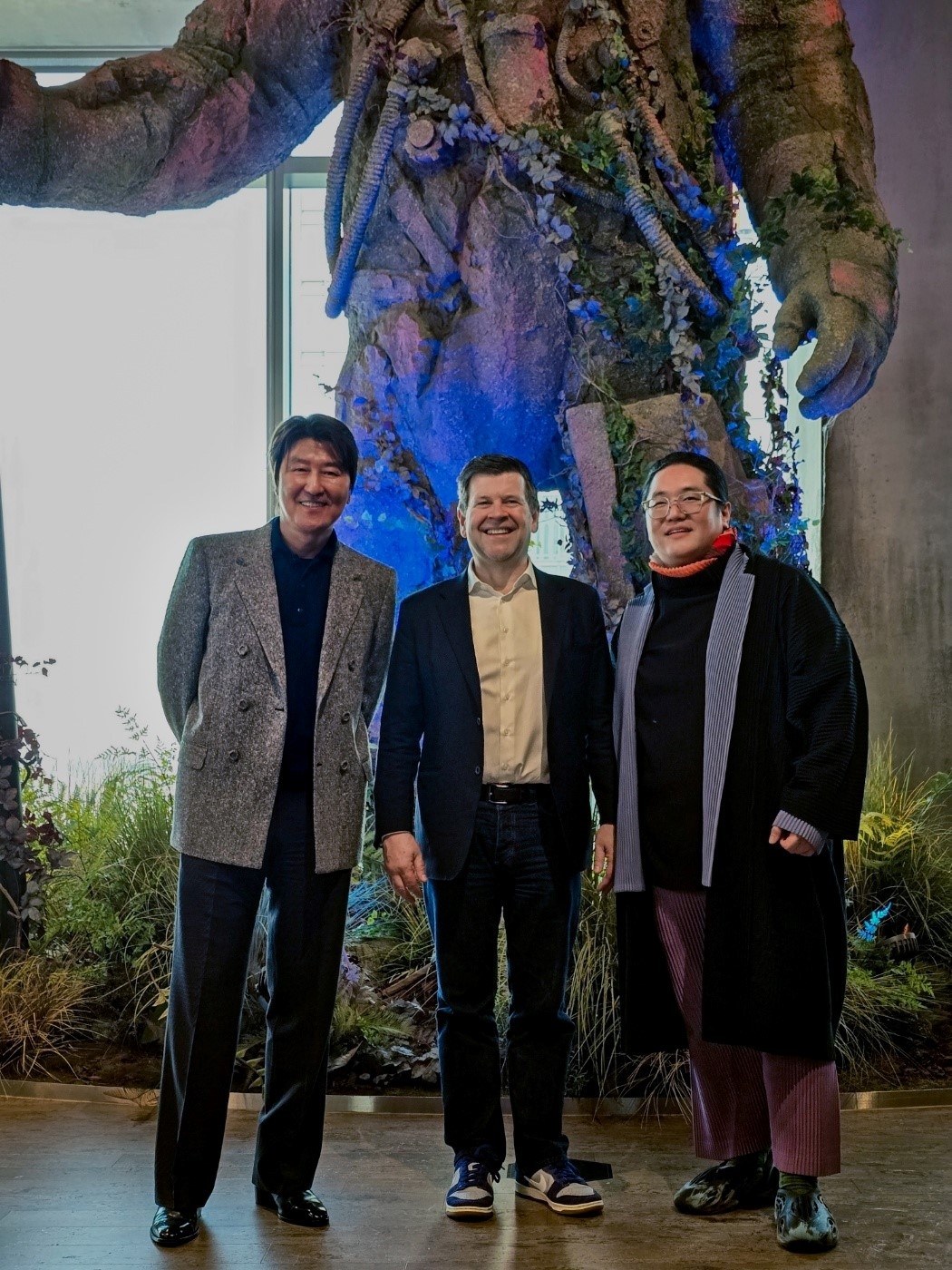
Galaxy Corp’s IPO ambitions: Breakout success or hype?
Galaxy Corp. is suddenly at the center of an IPO conversation that feels bigger than a typical entertainment-company growth story. Bob McCooey, vice chairman and head of global capital markets at Nasdaq, visited the Korean entertainment-tech firm’s headquarters in Yeouido, Seoul, to review its growth strategy and gauge the potential for a US stock market listing. For the market, the detail that matters is not just the meeting itself—but who made the trip and what that signals about cross-border listing appetite for K-entertainment and creator-driven IP.
The visit stands out because it is uncommon for a senior global capital-markets executive to pay an on-site call unless there is credible interest, meaningful scale potential, or a strategic narrative that could resonate with US investors. Galaxy Corp., known for its connection to K-pop icon G-Dragon, now faces the core question: is this the early outline of a globally marketable, tech-forward entertainment platform—or a hype cycle amplified by star power?
Galaxy Corp IPO: What Nasdaq’s interest signals for a potential US listing
McCooey’s visit can be interpreted as due diligence on story, structure, and scalability—three pillars that typically determine whether a company can go beyond local-market recognition and compete for global investor attention. A US listing is not only about raising capital; it’s also about meeting heightened expectations around governance, disclosure, and predictable financial narratives. For a company positioned at the intersection of entertainment and technology, the pitch usually leans on platform-like upside: repeatable revenue models, data-driven fan engagement, and IP monetization that extends beyond a single artist cycle.
For Galaxy Corp., the upside of even exploring a Nasdaq pathway is reputational as much as financial. A credible US listing narrative can attract partners, talent, and strategic investors who care about global branding. But it also comes with immediate scrutiny: investors will want to know how the company translates cultural impact into durable cash flows, how concentrated the business is around top talent, and whether its “entertainment-tech” label represents proprietary technology or mainly marketing positioning.
Nasdaq listing speculation: G-Dragon effect vs. fundamentals investors will demand
Industry skepticism typically emerges when the public story appears to run ahead of measurable fundamentals. Being “behind” a global icon like G-Dragon can provide tremendous momentum—audience reach, brand partnerships, and media visibility. However, the US public markets generally discount celebrity adjacency unless it is tied to a system that can scale beyond one superstar. The key diligence question is whether Galaxy Corp. has built an engine that consistently creates, manages, and monetizes IP across multiple creators, formats, and markets.
In practice, investors are likely to pressure-test several areas: concentration risk (how dependent revenue is on a handful of artists or projects), margin structure (whether tech claims translate into better unit economics), and commercialization pathways (licensing, merchandise, live events, content distribution, fan platforms, and brand deals). If Galaxy Corp.’s model is primarily service-driven, the narrative must show defensibility and expansion; if it is platform-driven, the company must show product adoption, retention, and predictable monetization.
K-entertainment tech and US capital markets: What must be proven before an IPO
For K-entertainment companies considering US capital markets, the bar is increasingly defined by clarity and repeatability. Global investors may love the category but still demand transparent reporting, disciplined forecasting, and a credible route to growth that is not purely sentiment-driven. A Nasdaq-facing strategy review suggests Galaxy Corp. is assessing how to message its business in terms US investors understand: total addressable market, competitive differentiation, and a roadmap for scaling content/IP across regions.
Whether this becomes a breakout success or fizzles into hype will depend on execution and disclosure. If Galaxy Corp. can demonstrate a scalable IP pipeline, a technology layer that meaningfully improves monetization, and governance that matches US listing expectations, the company could turn current speculation into a concrete global-market narrative. If not, the visit may be remembered as an attention spike rather than a turning point—valuable for branding, but insufficient for a sustainable IPO story.
For now, the most investable takeaway is that Galaxy Corp. appears to be exploring big-league options—and the market will be watching what it reveals next: strategic partnerships, revenue-model clarity, and whether its entertainment-tech identity is built on repeatable infrastructure rather than one-off star-driven momentum.
Reference/Source : https://www.koreaherald.com/article/10688115
댓글